

Short answer: yes, in your cabin baggage, up to 100Wh, and never in checked luggage. The longer answer explains why, and how to check your own device.
The 100Wh limit
Indian aviation rules follow the international standard for lithium batteries. Power banks up to 100 watt-hours (Wh) are permitted in cabin baggage without airline approval. Between 100Wh and 160Wh you need the airline's permission in advance. Above 160Wh they are not permitted on passenger aircraft at all.
Converting mAh to Wh
Power banks are advertised in mAh, but the rule is written in Wh. The conversion is straightforward:
Wh = (mAh × 3.7) ÷ 1000
The 3.7 is the nominal voltage of the lithium cells inside. So:
- 10,000mAh = 37Wh
- 20,000mAh = 74Wh
- 27,000mAh = 99.9Wh — just inside the limit
- 30,000mAh = 111Wh — needs airline approval
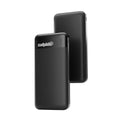
Every power bank in the Salpido range is comfortably within the 100Wh limit. Most power banks sold in India are.
Why it can never go in checked baggage
This is the rule that actually strands people, and it is not about capacity. Lithium batteries in the cargo hold are a fire risk that nobody can respond to mid-flight. In the cabin, a battery that starts overheating is visible and can be dealt with immediately.
So: power banks, spare batteries and loose lithium cells always travel in the cabin. If security finds one in a checked bag, the bag is pulled and you may miss the flight. Pack it in your handbag or backpack, not the suitcase you are checking.
Practical points that catch people out
- Keep the label readable. Security may ask for the Wh or mAh rating. A power bank with a worn-off label can be refused, because staff cannot verify it.
- Most airlines allow two spare power banks per passenger, but this varies. If you are carrying several, check first.
- Some airlines now restrict using or charging power banks during the flight, even though carrying them is fine. Several carriers introduced this recently.
- Do not pack it loose against metal. Keys or coins across the terminals can short a battery. A pouch or a separate pocket is enough.
What about smartwatches, earbuds and laptops?
Devices with built-in batteries — phones, laptops, smartwatches, earbuds — can go in either cabin or checked baggage, though cabin is always safer and most airlines prefer it. The strict cabin-only rule applies to spare batteries and power banks, which are not installed in a device.
Rules change and vary by airline. The 100Wh limit has been stable for years, but in-flight usage restrictions are newer and differ between carriers. Check your airline's dangerous goods page before you fly, particularly on international routes.